
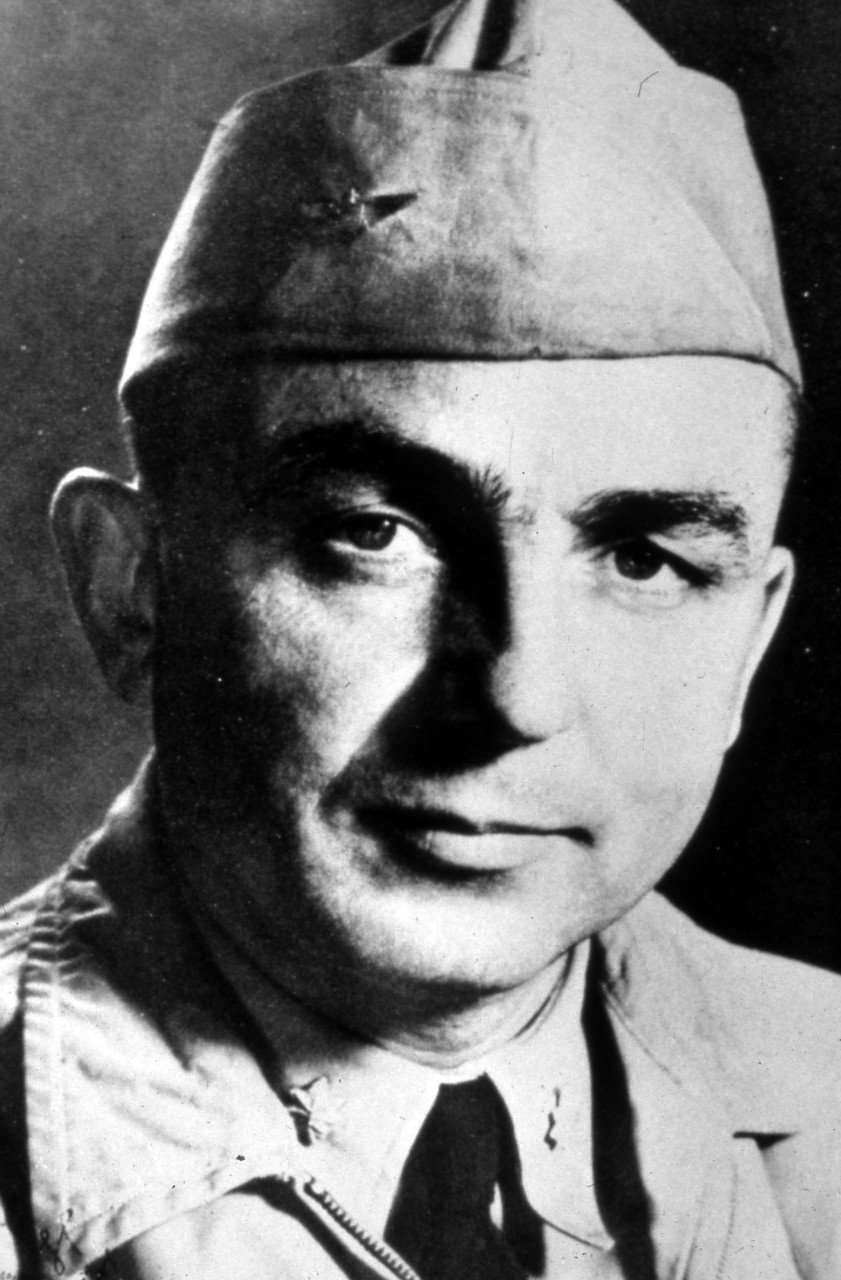
The Dive Bomber Commander Who Pressed the Attack at Midway
Maxwell Franklin Leslie was one of the key American naval aviators of the Battle of Midway. As the commanding officer of Bombing Squadron Three, he led his dive bombers from the aircraft carrier Yorktown into one of the most important attacks of the Pacific war.
On June 4, 1942, Leslie and his squadron struck the Japanese carrier force at the exact moment when American courage, timing, and determination mattered most. His leadership helped destroy Japan’s offensive momentum and helped secure one of the greatest victories in United States naval history.
Max Leslie did not simply participate in the Battle of Midway. He helped make victory possible.
Quick Facts
Full Name: Maxwell Franklin Leslie
Born: October 24, 1902, in Seattle, Washington
Died: September 26, 1985, in San Diego, California
Service Branch: United States Navy
Role at Midway: Commanding Officer of Bombing Squadron Three aboard the aircraft carrier Yorktown
Rank at the Battle of Midway: Lieutenant Commander
Highest Rank Achieved: Rear Admiral
Major Recognition: Navy Cross
Known For: Leading Bombing Squadron Three in the dive-bombing attack against the Japanese carrier force during the Battle of Midway
A Naval Aviator Prepared for the Moment
Max Leslie entered the United States Naval Academy in 1922 and graduated in 1926. He later received flight training at Naval Air Station Pensacola and became a naval aviator in 1930.
By the time the United States entered the Second World War, Leslie was already an experienced officer and pilot. He had served with Bombing Squadron Three and understood the demands of carrier aviation at a time when naval air power was becoming one of the most important forces in modern warfare.
At Midway, that experience mattered.
The battle placed enormous pressure on American aviators. The Japanese fleet was powerful, the ocean was vast, and every decision carried life-or-death consequences. Leslie was responsible for leading his squadron into danger with discipline, focus, and courage.
The Attack on the Japanese Carrier Force
On June 4, 1942, Leslie led Bombing Squadron Three from the aircraft carrier Yorktown against the Japanese carrier force. His squadron flew into a sky filled with danger: enemy fighters, anti-aircraft fire, fuel concerns, and the chaos of a major naval battle.
Even before the attack, Leslie faced a serious problem. His own aircraft lost its bomb before reaching the target because of an equipment malfunction. In practical terms, the commander of a dive-bombing squadron had suddenly lost the weapon he was supposed to deliver.
Leslie did not turn away.
He continued to lead his men into the attack. Even without his bomb, he dove with his squadron and helped guide the assault against the Japanese carrier force. His leadership kept the formation committed at the critical moment.
Bombing Squadron Three struck the Japanese aircraft carrier Sōryū, contributing to the destruction of one of the carriers that had threatened American forces across the Pacific. Leslie’s squadron helped deliver the kind of blow that changed the direction of the battle and the war.
Courage Without Excuses
Max Leslie’s story at Midway is powerful because it shows leadership under pressure. When equipment failed, he did not use that failure as a reason to leave the fight. When the mission became more dangerous, he stayed with his squadron. When the attack had to be carried through, he carried it through.
His Navy Cross recognized the courage and leadership he showed in pressing home the attack against Japanese naval units despite heavy anti-aircraft fire and fighter opposition.
The Battle of Midway was won by men who kept going when the odds were brutal. Leslie was one of those men.
Why Lieutenant Commander Leslie Matters
Lieutenant Commander Max F. Leslie represents the discipline, courage, and resolve of United States naval aviation at its best. He led from the front. He stayed with his squadron. He helped deliver one of the decisive attacks of the Battle of Midway.
His actions remind us that victory is often shaped by decisions made under impossible pressure. At Midway, Leslie chose to keep fighting.
That is why Max Leslie belongs among the Midway Six.
His name should be known. His leadership should be remembered. His courage should be honored.
Part of the Midway Six
Lieutenant Commander Max F. Leslie is one of the six American naval aviators at the center of the Midway Six Medal of Honor campaign.
Together, Clarence W. McClusky, Max F. Leslie, Eugene E. Lindsey, Lance E. Massey, John C. Waldron, and Richard H. Best helped shape the outcome of the Battle of Midway through extraordinary courage, leadership, and sacrifice.
Their actions helped change the course of the Second World War. Their legacy continues to inspire Americans today.
Help Honor Lieutenant Commander Max F. Leslie
Lieutenant Commander Leslie’s leadership at Midway helped secure one of the most important victories in American history. His courage deserves more than a passing mention in history books.
It deserves national recognition.
HonorAmericanHeroes.org exists to raise awareness, educate Americans, and build support for recognizing the Midway Six with the Medal of Honor.
Read their stories. Share their names. Help carry their legacy forward.