
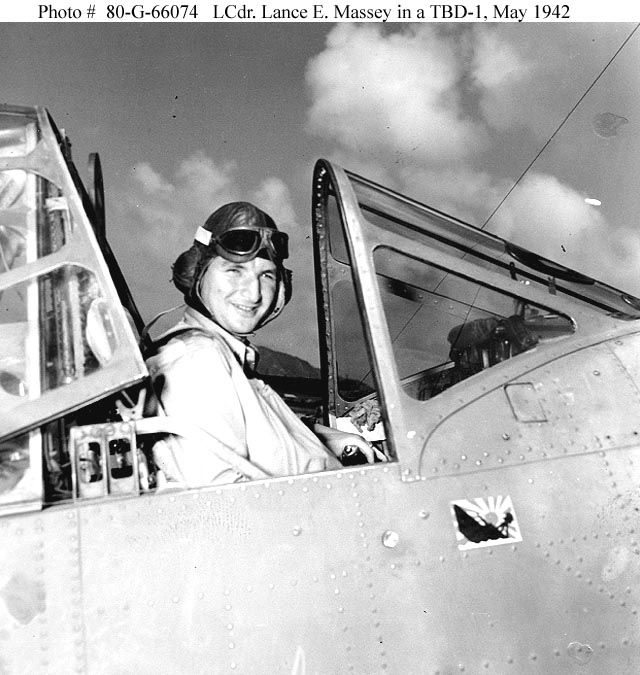
The Torpedo Squadron Commander Who Led Into the Fire at Midway
Lance Edward Massey was one of the courageous United States Navy aviators who helped define the Battle of Midway. As the commanding officer of Torpedo Squadron Three, he led his men from the aircraft carrier Yorktown into one of the most dangerous attacks of the Pacific war.
On June 4, 1942, Massey and his squadron flew directly against the Japanese carrier force. Their aircraft were slow. The enemy defenses were overwhelming. The mission required them to press forward at low altitude against fighter aircraft and anti-aircraft fire.
Massey led his men into that storm.
His final mission at Midway stands as one of the clearest examples of leadership, sacrifice, and American courage in the face of terrible odds.
Quick Facts
Full Name: Lance Edward Massey
Born: September 20, 1909, in Syracuse, New York
Died: June 4, 1942, during the Battle of Midway
Service Branch: United States Navy
Role at Midway: Commanding Officer of Torpedo Squadron Three aboard the aircraft carrier Yorktown
Rank at the Battle of Midway: Lieutenant Commander
Major Recognition: Navy Cross, Distinguished Flying Cross, Purple Heart
Known For: Leading Torpedo Squadron Three in its torpedo attack against the Japanese carrier force during the Battle of Midway
A Naval Aviator Ready for War
Lance Massey graduated from the United States Naval Academy in 1930 and became part of the generation of naval officers who helped carry American sea power into the age of aircraft carriers.
Before the Battle of Midway, Massey had already proven himself in combat. During the early months of the Second World War, he served with Torpedo Squadron Six from the aircraft carrier Enterprise and took part in operations against Japanese-held positions in the Pacific.
By the spring of 1942, Massey had taken command of Torpedo Squadron Three. His squadron was later assigned to the aircraft carrier Yorktown, a ship that had already been damaged in the Battle of the Coral Sea and rushed back into action for the fight at Midway.
The battle ahead would demand everything from Massey and his men.
The Torpedo Attack at Midway
On June 4, 1942, Lance Massey led Torpedo Squadron Three from Yorktown against the Japanese carrier force.
The torpedo squadrons at Midway faced one of the most punishing assignments in naval aviation. Their aircraft had to fly low and steady toward heavily defended enemy ships. They were vulnerable to enemy fighters. They were vulnerable to anti-aircraft fire. They had little room to maneuver and almost no margin for survival.
Massey led his squadron forward anyway.
Torpedo Squadron Three pressed its attack against the Japanese fleet with extraordinary courage. The squadron suffered devastating losses. Massey was killed in action while leading his men in the assault.
His Navy Cross recognized his extraordinary heroism in leading a torpedo-plane attack against enemy naval forces despite intense opposition.
Courage That Helped Shape the Battle
The torpedo attacks at Midway came at a terrible cost. Many of the men who flew those missions never came home. Their aircraft were outmatched, their odds were brutal, and their attacks exposed them to some of the most dangerous conditions of the battle.
But their sacrifice mattered.
The torpedo squadrons forced the Japanese defenders to react. They pulled attention, fighters, and defensive energy into the low-altitude fight. They kept pressure on the Japanese carrier force and helped create the conditions for the American dive bombers that arrived at the decisive moment.
Lance Massey and his men were part of that chain of courage. They carried out their mission despite knowing how dangerous it was. They pressed forward because the battle demanded it and because their country needed them to do it.
Why Lieutenant Commander Massey Matters
Lieutenant Commander Lance E. Massey represents the fighting spirit of United States naval aviation at Midway. He led from the front. He did not send his men into danger from behind a desk. He flew with them.
His story is one of action, sacrifice, and duty. At Midway, Massey gave his life while leading one of the most dangerous attacks of the battle.
That is why Lance Massey belongs among the Midway Six.
His name should be known. His leadership should be remembered. His courage should be honored.
Part of the Midway Six
Lieutenant Commander Lance E. Massey is one of the six American naval aviators at the center of the Midway Six Medal of Honor campaign.
Together, Clarence W. McClusky, Max F. Leslie, Eugene E. Lindsey, Lance E. Massey, John C. Waldron, and Richard H. Best helped shape the outcome of the Battle of Midway through extraordinary courage, leadership, and sacrifice.
Their actions helped change the course of the Second World War. Their legacy continues to inspire Americans today.
Help Honor Lieutenant Commander Lance E. Massey
Lieutenant Commander Massey’s final mission at Midway was an act of extraordinary courage. He led his squadron into overwhelming danger and gave his life in one of the most important battles in American history.
His story deserves to be told. His name deserves to be remembered. His service deserves national recognition.
HonorAmericanHeroes.org exists to raise awareness, educate Americans, and build support for recognizing the Midway Six with the Medal of Honor.
Read their stories. Share their names. Help carry their legacy forward.