
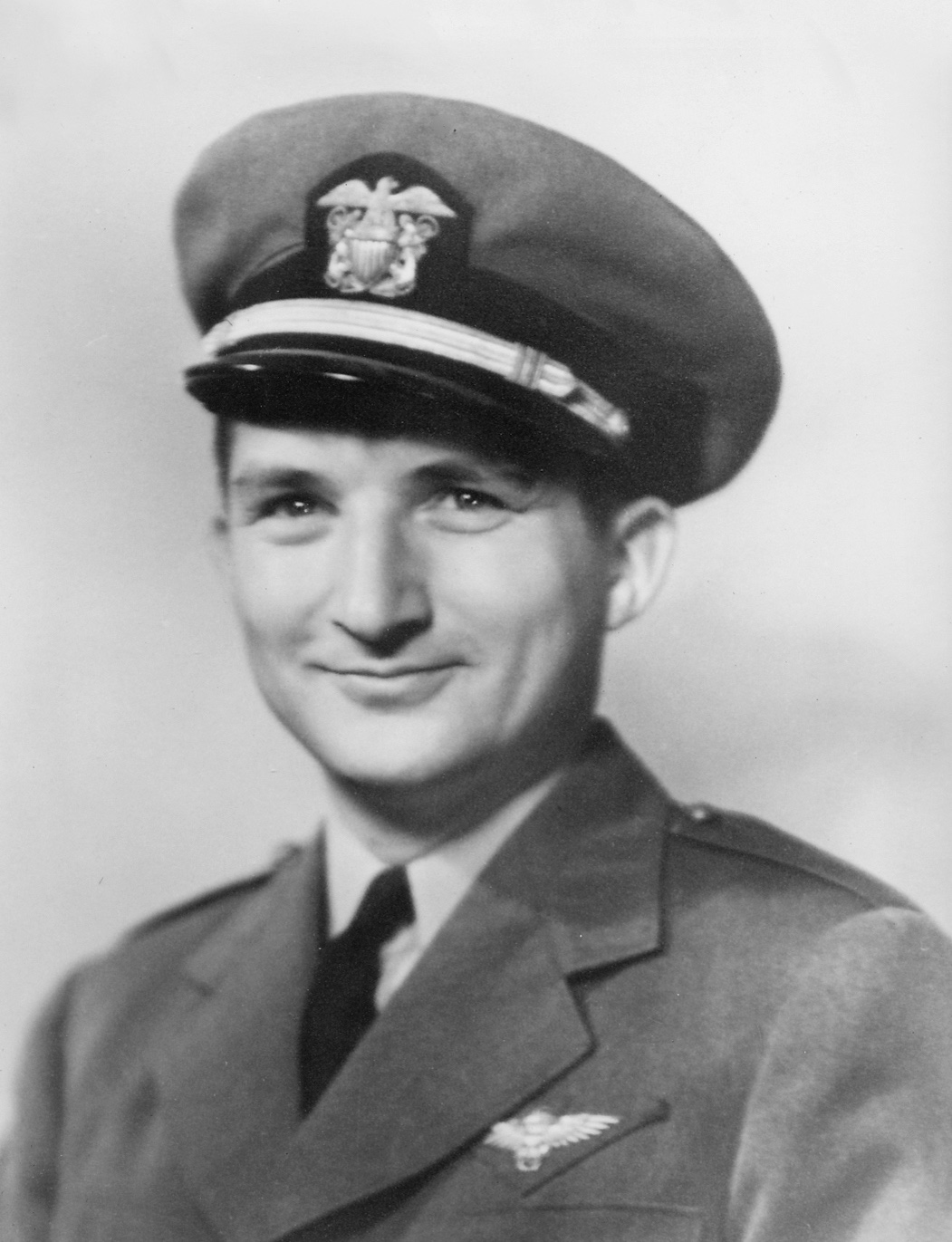
From the Naval Academy Class of 1930 to command of Torpedo Squadron Three, the life of Lance E. Massey reflects the courage, dedication, and sacrifice of the Midway Six.
Long before Lieutenant Commander Lance E. Massey led Torpedo Squadron Three toward the Japanese carrier force on June 4, 1942, he was a young midshipman at the United States Naval Academy in Annapolis, Maryland. He studied, played soccer, and learned the responsibilities of a naval officer at an institution whose graduates would soon shoulder the enormous burden of a world at war. To his classmates, he was also a familiar, smiling presence, the kind of person they remembered with affection when they assembled their graduating yearbook.
The passage from Annapolis to Midway was neither short nor inevitable. Massey graduated in 1930, served aboard surface ships, trained as an aviator, instructed other pilots, and gained hard-won experience in the opening months of the Pacific War. His story deserves to be understood in full, including the years of preparation and the people whose lives were bound to his, before the final mission for which he is remembered.
From Watertown to Annapolis
Lance Edward Massey was born in Syracuse, New York, on September 20, 1909, and grew up in Watertown. According to the biographical account preserved by the Naval Academy’s Virtual Memorial Hall, he attended high school in Watertown before continuing his education at Severn School in Maryland, a preparatory school near Annapolis. In 1926, still only sixteen, he entered the United States Naval Academy. The Navy’s official Dictionary of American Naval Fighting Ships entry for USS Massey records his appointment as a midshipman on June 23, 1926.
His journey was shaped by an interest in the water that predated his formal naval education. In a short profile preserved in the Academy’s 1930 Lucky Bag yearbook, his classmates recalled that he had spent time on boats near his hometown and developed an early desire for the life of a sailor. The recollection is lighthearted, as many yearbook biographies were, but it establishes something important: before the Navy trained Massey to command men and fly aircraft, he had already imagined a future at sea.
At Annapolis, he entered a demanding program intended to prepare officers for far more than their first assignments. Midshipmen studied technical subjects, practiced seamanship, participated in drills, competed in athletics, and learned to accept responsibility for themselves and others. The Naval Academy’s digitized Annual Registers and related historical publications offer a window into this system of education, discipline, and military preparation during Massey’s era. Those four years formed the professional foundation on which his subsequent service would rest.
A Young Man Remembered by His Classmates
Military biographies tend to record ranks, commands, decorations, and dates. A Naval Academy yearbook can preserve a different kind of history, one written by people who knew an officer before his achievements and sacrifices became matters of national remembrance. Massey’s entry in the Class of 1930 Lucky Bag, also transcribed by the Naval Academy’s Virtual Memorial Hall, identifies him by the nickname “Lem” and records his participation in the soccer squad across all four class years.
His classmates also remembered the smile that seemed to accompany him everywhere. They called it his “persistent smile” and suggested that he took life’s difficulties with an ease they admired. In their account, that cheerful disposition could even disrupt the solemnity of a drill. The remarks were composed well before the Battle of Midway, and their value lies precisely in that timing: they show how fellow midshipmen saw Massey when his future was still unwritten.
The yearbook also jokes about his struggle with mathematics during his preparatory-school days. It would be a mistake to turn that affectionate teasing into a definitive academic assessment or a prediction of future leadership. What the record does show is a young man remembered for his sociability, enthusiasm, athletic participation, and evident pleasure in the company of others. Those details give a human dimension to a name now associated with wartime sacrifice.
At Annapolis, Massey was one of thousands of young Americans preparing for the obligations of commissioned service. He could not know the particular test awaiting him twelve years later, but the Academy’s expectations were already clear. An officer would be required to master his profession, act under pressure, and accept responsibility for the men entrusted to his leadership.
The Class of 1930 and the Beginning of a Naval Career
On June 5, 1930, Massey graduated and received his commission as an ensign, according to the Navy’s official history of his namesake destroyer. His first assignment was aboard the battleship USS Texas. The transition from midshipman to commissioned officer was a significant one. Classroom lessons, shipboard exercises, and Academy routines now had to be applied within the daily operations of the fleet.
He soon pursued naval aviation, the developing arm of sea power that was changing how the Navy could scout, strike, and defend across great distances. The USS Massey Association records his flight training at Pensacola, Florida, and the Navy states that he received his designation as a naval aviator on April 1, 1932. His professional path was taking him from the traditions of the battleship fleet into the increasingly important world of carrier-based aircraft.
The years that followed exposed him to more than one kind of aviation assignment. He served in Scouting Squadron Three associated with USS Lexington, later worked as a flight instructor at Pensacola, and flew observation assignments connected with battleships, including USS New Mexico and USS Idaho. These postings, documented in the biographical record and in Navy officer-directory research assembled by the Virtual Memorial Hall, placed him within a service that was learning how to integrate aircraft into naval operations.
His time as an instructor is particularly meaningful in a story about education. Massey had entered Annapolis as a teenager seeking a naval career; within a few years of graduation and aviation training, he was helping prepare other aviators for theirs. Teaching required him to pass on practical knowledge while reinforcing the habits of judgment, discipline, and safety that military flying demanded. The officer who would later lead a torpedo squadron had already learned to bear responsibility for the training of others.
The Academy Connections That Continued at Sea
Massey’s story also reveals how the Naval Academy continued to connect officers after graduation. The Virtual Memorial Hall’s research into Navy directories places him aboard USS Lexington during a period when Eugene Lindsey, another of the Midway Six and a member of the Class of 1927, was also assigned to the carrier. Their presence on the same ship is documented, although the surviving records cited here do not establish the nature of any personal relationship between them.
The connection became still more striking in the months before Midway. In October 1941, Massey became executive officer of Torpedo Squadron Six aboard USS Enterprise, according to the Virtual Memorial Hall’s account. At Midway, VT-6 would be commanded by Eugene Lindsey. By April 1942, however, Massey had moved to command Torpedo Squadron Three, while Lindsey remained in charge of VT-6. Two Naval Academy graduates, from different classes and with different careers, would soon lead separate torpedo squadrons into the same battle.
These relationships illuminate the deeper subject of the Midway Six series. The Academy did more than award diplomas. It was part of the common professional world in which officers advanced, learned from one another, served aboard the same ships, and sometimes found their careers crossing again in circumstances none could have anticipated.
Experience in the Opening Months of War
When Japan attacked Pearl Harbor in December 1941, Massey was already an experienced naval aviator. His first months of wartime service brought the responsibility and danger for which years of training had prepared him. On February 1, 1942, he led nine torpedo aircraft in an attack on Japanese shipping in the Marshall Islands. The Navy’s official history of USS Massey records that his leadership during the attack on Kwajalein Atoll earned him the Distinguished Flying Cross.
The operation demonstrated his ability to lead aircraft against an enemy under combat conditions. Yet the challenges of launching torpedo attacks from carriers remained severe. The aircraft had to approach at low altitude and relatively low speed, exposing their crews to fighter attacks and antiaircraft fire. Courage could carry men into an attack, but it could not remove the mechanical and tactical disadvantages they faced.
On April 14, 1942, Massey assumed command of Torpedo Squadron Three. The Virtual Memorial Hall’s chronology records the date, while the Naval History and Heritage Command’s photographic collection preserves images of him and the men he commanded shortly before Midway. One photograph shows him seated in his Douglas TBD Devastator at Naval Air Station Ford Island on May 24, 1942. Another shows the squadron’s pilots gathered at Kaneohe, Hawaii, in late May. These photographs are among the last visual records of men who were about to undertake a mission of extraordinary danger.
For Massey, the command brought together the different parts of his life in naval service. There was the seamanship and discipline acquired at Annapolis, the flight experience gained in peacetime, the responsibilities of instruction, and the combat leadership demonstrated earlier in 1942. None guaranteed survival. All mattered to the men who would follow him.
June 4, 1942: Torpedo Squadron Three at Midway
On the morning of June 4, Torpedo Squadron Three launched from USS Yorktown as part of the American carrier force confronting the Japanese fleet near Midway Atoll. Massey led twelve Douglas TBD Devastator torpedo bombers toward the enemy carriers. The contemporaneous USS Yorktown action report describes the formation, its approach, and the Japanese fighter attacks that began while the aircraft were still miles from their objectives.
The squadron came under overwhelming pressure as it attempted to close the distance. According to Yorktown‘s report, Massey was shot down in flames as he turned toward an enemy carrier to begin his attack. The surviving planes continued, but the losses were devastating. Ten of VT-3’s twelve torpedo aircraft were destroyed. Massey was thirty-two years old.
The first American combat reports believed that torpedoes from the attacking squadrons had struck Japanese carriers. Later historical analysis revised that assessment. The Naval History and Heritage Command’s retrospective account of Midway explains that the three carrier-based torpedo squadrons achieved no confirmed torpedo hits, despite their courage and their terrible losses. Preserving that distinction honors the men through an accurate account of what they faced and what happened.
Their attacks nonetheless formed part of the battle’s decisive sequence. The repeated American assaults forced the Japanese carrier force to maneuver and commit fighter aircraft to defense, complicating its ability to organize a counterstrike. The arrival of American dive bombers later that day brought the devastating blows for which Midway is remembered. Massey and his squadron did not live to see the outcome, but the determination of the torpedo crews remains inseparable from the story of the battle.
An Honor That Outlived the Battle
Massey was posthumously awarded the Navy Cross for his actions at Midway. The published Navy Cross citation recognizes the extraordinary heroism of an officer who continued his mission despite the likelihood that he would lose his life. He also received the Distinguished Flying Cross for his earlier combat leadership at Kwajalein. These awards record the nation’s recognition of a career devoted to service and a final act of exceptional courage.
His name was also carried forward by USS Massey (DD-778), a destroyer named in his honor. The Naval History and Heritage Command’s ship history records the dedication, while the Naval Academy’s Virtual Memorial Hall preserves the ship’s connection to the officer and his family. His widow, Marjorie, participated in the ship’s christening in 1944. Through the vessel and the sailors who served aboard her, the name of a fallen aviator remained part of the living Navy.
The legacy also continued at Annapolis. The memorial’s family history records that Massey’s son Lance Bradford Massey graduated from the Naval Academy with the Class of 1958 and later retired as a Navy commander. That second generation gives the Academy connection a lasting, deeply personal meaning. The institution that prepared Lance Massey for service remained part of his family’s story after his death.
Remembering the Man Behind the Mission
It is easy to begin the story of Lance Massey with his final flight. The image of twelve torpedo bombers approaching a defended Japanese fleet is powerful, and the sacrifice of their crews demands remembrance. But beginning there leaves out the teenager who dreamed of a life at sea, the Academy soccer player whose classmates remembered his smile, the young ensign reporting to a battleship, and the instructor who helped other pilots learn their craft.
The 1930 Lucky Bag gives us a glimpse of that younger Lance Massey. The Navy’s historical records reveal how he grew into the responsibilities of command. Together, they tell a story larger than a single day in June 1942, one shaped by education, friendship, family, duty, and the deliberate preparation of a naval officer.
Lance Massey was one of the Midway Six, six Naval Academy graduates whose actions during the Battle of Midway exemplified extraordinary courage and sacrifice. His road to that battle began at Annapolis, where the qualities of naval leadership were taught and tested long before the nation called upon them in war. Remembering that road allows us to honor the whole of his life, and the men who followed him, with the care their service deserves.
Leave a Reply